
Walking Journeys Series
Matsu Walking Journey 2027
【Activity Introduction】
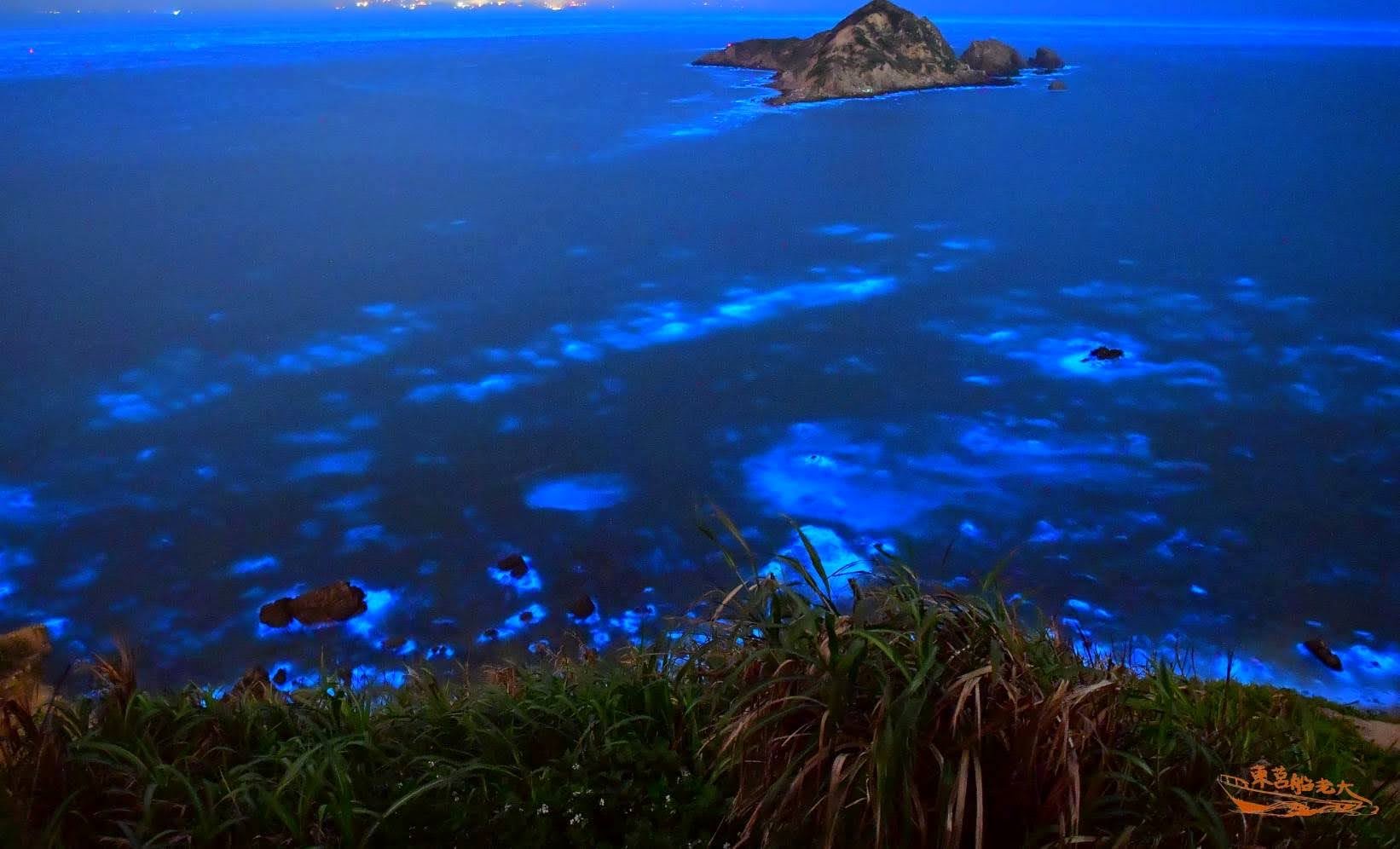
Part of our Discover Taiwan Walking Series, this six-day trip explores magnificent coastlines on the nation’s northern frontier, distinctive villages, authentic Matsu culture and delicious local food.
This six-day, six-night itinerary will transform your understanding of Matsu. As we walk these seemingly distant islands amid changing light and sea views, new perspectives unfold!
[Date/cost of activity]
- 2027/6/20Depart by ferry on Sunday evening through June 26 (Saturday): 6 days, 6 nights.
- Six days and six nights: NT$25,000 in total.
- Early-bird price before January 31, 2027: NT$22,500.
- Registration closes April 30, 2027.
Cost statement
- Fees for trip leaders, camp counselors and guides throughout.
- Includes the outbound New Taima Ferry and return flight.
- Lecturer and venue fees.
- Insurance: NT$1,000,000 accident coverage and NT$100,000 medical coverage for accidental injuries.
- Three meals a day during the activity, plus snacks along the walk.
- Accommodation costs
- Other unlisted costs, personal itineraries and personal expenses are your responsibility.
Activity Schedule <For reference purposes only, the actual itinerary is adjusted to the field environment, weather and personnel conditions >
- The night before: Meet at Keelung Harbor at 20:00 and take the New Taima ferry to Dongyin.
- Day one:
06:00: Arrive at Zhongzhu Harbor, Dongyin.
06:00–07:00: Walk to 7-Eleven in Nan’ao for breakfast and supplies.
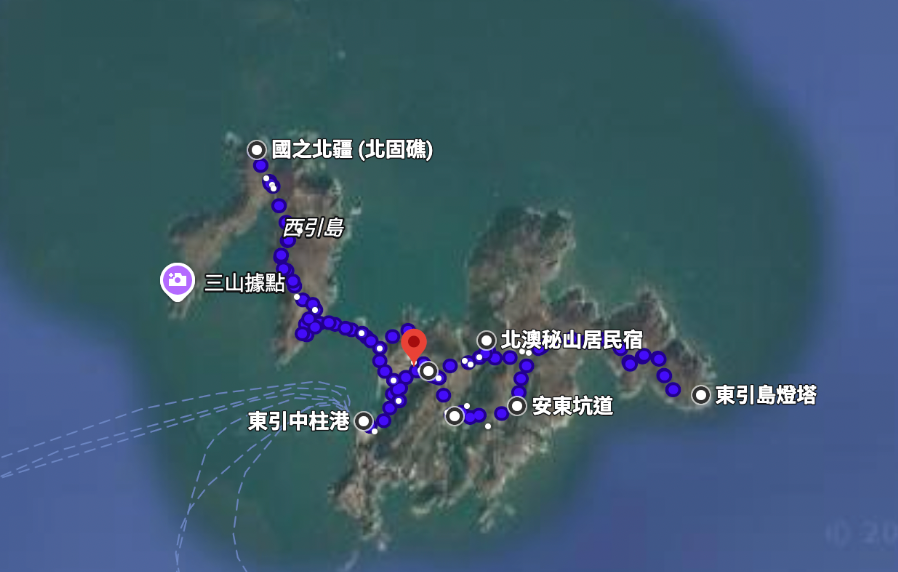
7:00 walking departure → Dongyin Distillery (pass by) → Zhongyi Biaohan Monument (pass by) → Andong Tunnel (15 minutes inside, excluding the time needed to descend and ascend) → A Thread of Sky (30 minutes) → Dongyin Lighthouse (15 minutes) → Lighthouse Trail (Zhenhai Tianwang Stone Inscription) → Xiaoziao → Beiao → Nanao (lunch)
12.30 – 14:00 Lunch and Rest
14:00–18:00: Depart for Xiyin → Zhongzhu Island → Crouching Crocodile → secluded Houao → Northern Frontier → return along the same route to Dongyin, accompanied by the sunset.
About 13.5 kilometres
Presenting the highlights:
Nan’ao Village
Nan'ao Village sits in a natural bay on Dongyin's southern coast, built between mountains and sea. It is the township's bustling administrative, commercial and residential center. Houses rise in layers along the steep slopes, forming a distinctive hillside settlement. The township office, post office and other administrative facilities are here, along with many local eateries. Winding stairways preserve the island atmosphere, while the straight Zhong Road divides the village in two, revealing the unhurried rhythms of an old fishing community.
Andong Tunnel
Andong Tunnel is Dongyin's most impressive underground military complex, excavated through Erzong Mountain's granite. Its steep passage descends for 300 meters, passing facilities including the company commander's room, sleeping quarters and ammunition stores. After the steep corridor, the space opens into gun ports and observation windows facing the open sea, with magnificent views of the ocean and sheer cliffs. In spring and summer, the cliffs offer excellent opportunities to watch nesting black-tailed gulls.
A Thread of Sky
A Thread of Sky is a characteristic sea-eroded chasm on Dongyin. Two towering vertical granite walls stand so close together that only a narrow strip of sky is visible overhead. Waves surge in from the open sea and strike the walls with a deafening roar. Concrete paths and bridges span the top of the dramatic gorge, once an important frontline military position.
Dongyin LighthouseOne of only two nationally designated historic monuments.
Dongyin Lighthouse, also known as Dongyong Lighthouse, stands on the rugged headland of Shiweishan on Dongyin. Built in 1904, the 30th year of the Qing dynasty’s Guangxu reign, it is one of Matsu’s two nationally designated historic monuments. Its white granite cylindrical tower and classical British-style buildings stand between the deep-blue sea and sheer cliffs. Follow the white-railed path for sweeping views of waves breaking against the shore, especially magnificent at dawn and dusk.
Northernmost Frontier
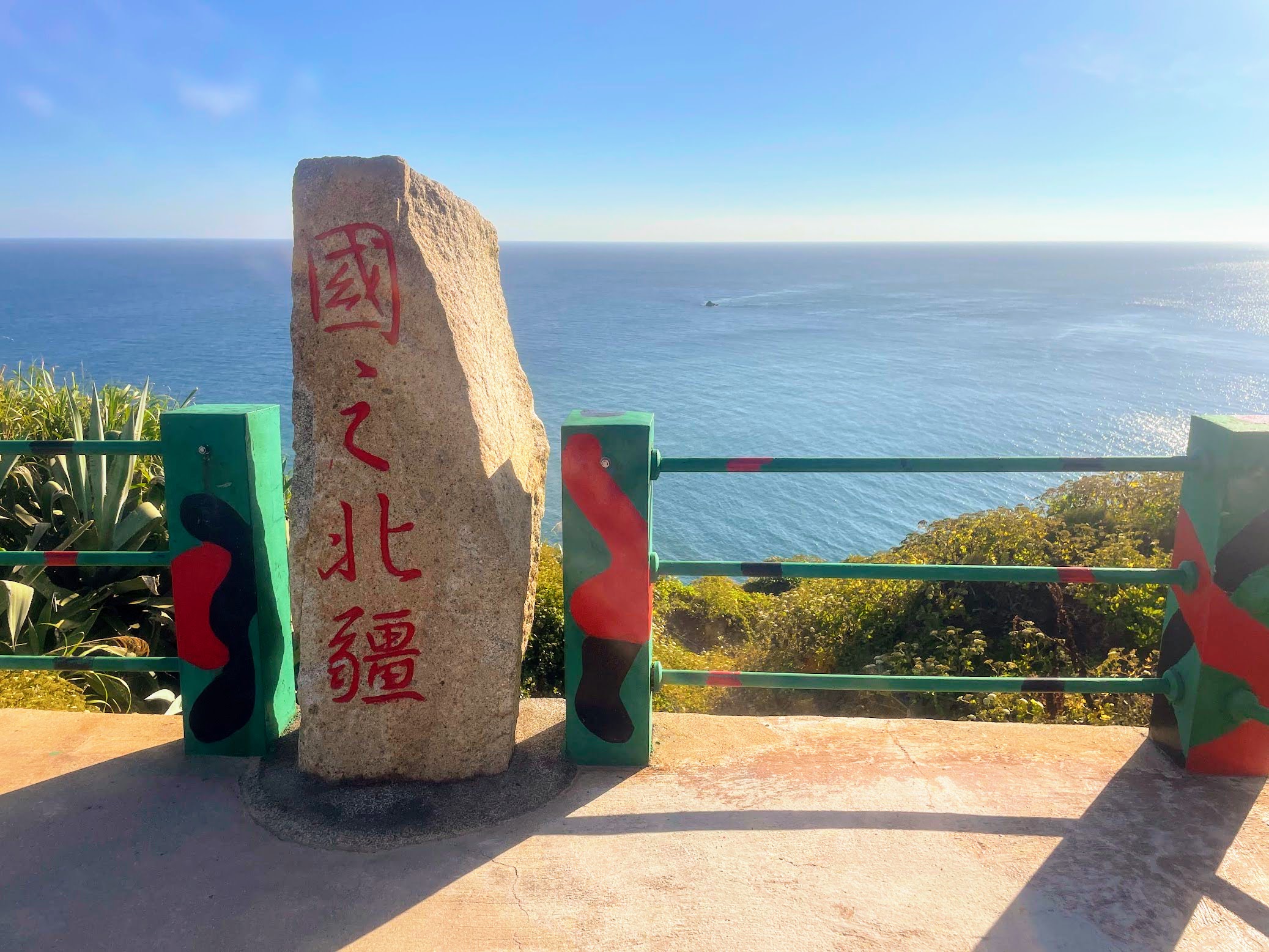
The Northern Frontier viewpoint stands on the northwestern cape of Xiyin Island, marked by a stone monument bearing the words ‘Northern Frontier.’ It is a popular photo stop at the country's northern edge. Look approximately 600 meters north across the open view to see Beigu Reef, the northernmost territory under the Republic of China's effective administration. Strong winds and surging waves surround the viewing platform, giving this remote border outpost a distinctive sense of isolation.
- Day two:
6:00: Boat to Nangan.
Dongyin → Nangan at 11:00 → Dongju (lunch)
14:00 – 18:30
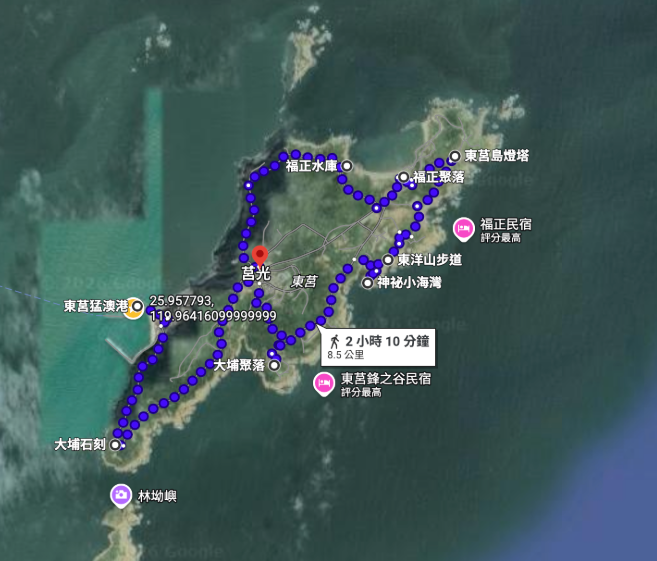
Meng’ao → Daping (lunch) → Dapu Village → Hidden Bay (Buddha’s Hand Trail) → Dongyangshan Trail → Lighthouse → Fuzheng Village → Fuzheng Beach → Fuzheng Reservoir → Daping guesthouse (dinner)
About 8.5 kilometres
Presenting the highlights:
Dapu Stone Inscription—County-Designated Historic Site
The Dapu Rock Inscription is carved into granite inside Huaigu Pavilion at the southern end of Dongju. One of Matsu's only two county-designated historic monuments, it records General Shen Yourong's capture of 69 Japanese pirates during the Ming dynasty's Wanli reign without losing a single soldier. Its strong, composed calligraphy bears witness to the turbulent history of coastal defense against piracy in southeastern China and has considerable documentary and historical value. The story of its discovery is equally dramatic.
Dapu Village
Dapu Village, formerly written 大浦, was once Dongju’s second-largest bustling fishing village. Houses climb the hillside above the bay. As fishing declined and residents moved away, it became almost deserted, with only one household remaining. In recent years, village conservation and restoration have revived old houses, and some residents have returned to open guesthouses, creating a distinctive village holiday destination.
Dongyangshan Trail
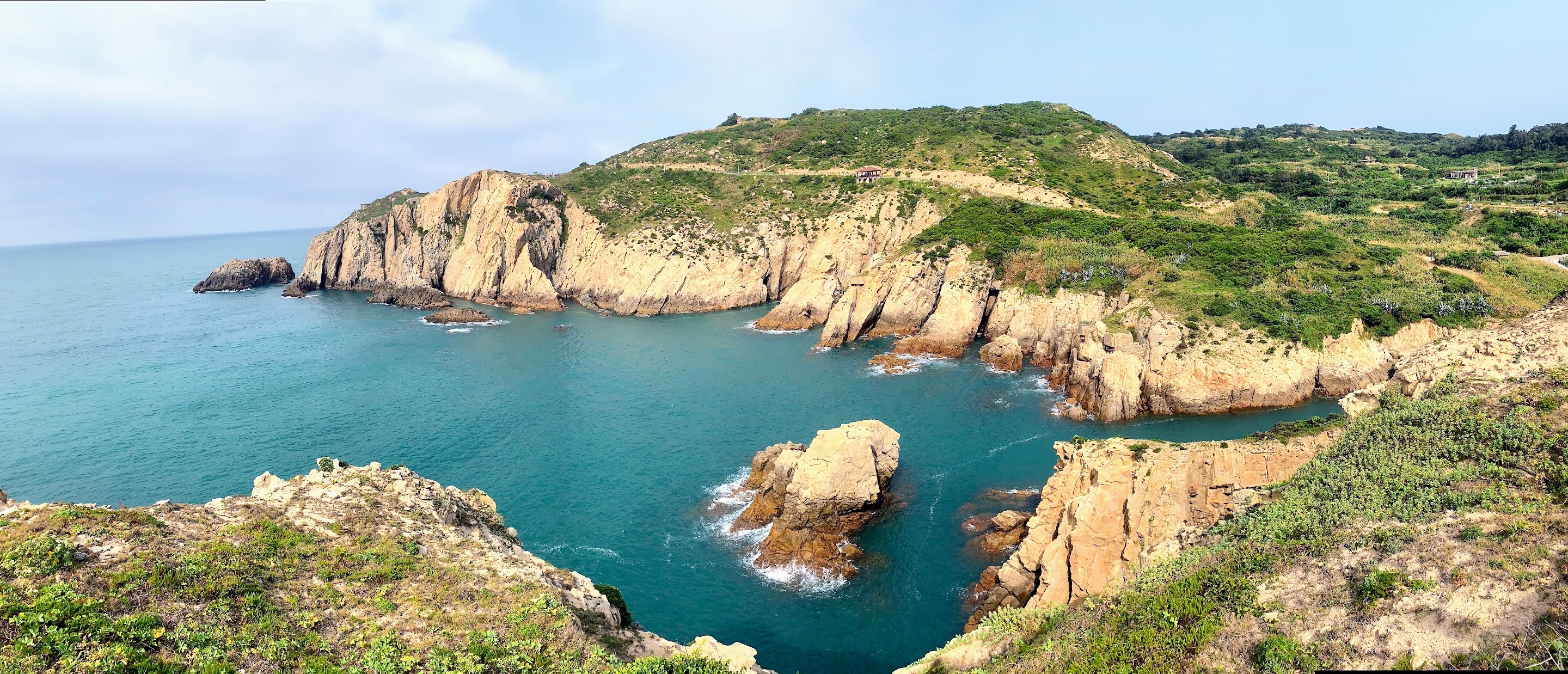
Dongyangshan Trail follows the steep ridge on Dongju's eastern side for approximately 1.5 kilometers, with a gentle, easy walking surface. Dramatic sea cliffs, erosion channels and unusual rocks surround the route, with views of "Mystery Bay" and offshore reefs. The viewing platform offers expansive vistas, where powerful coastal winds and rugged landforms take your breath away.
Dongquan Lighthouse (national historic monument)
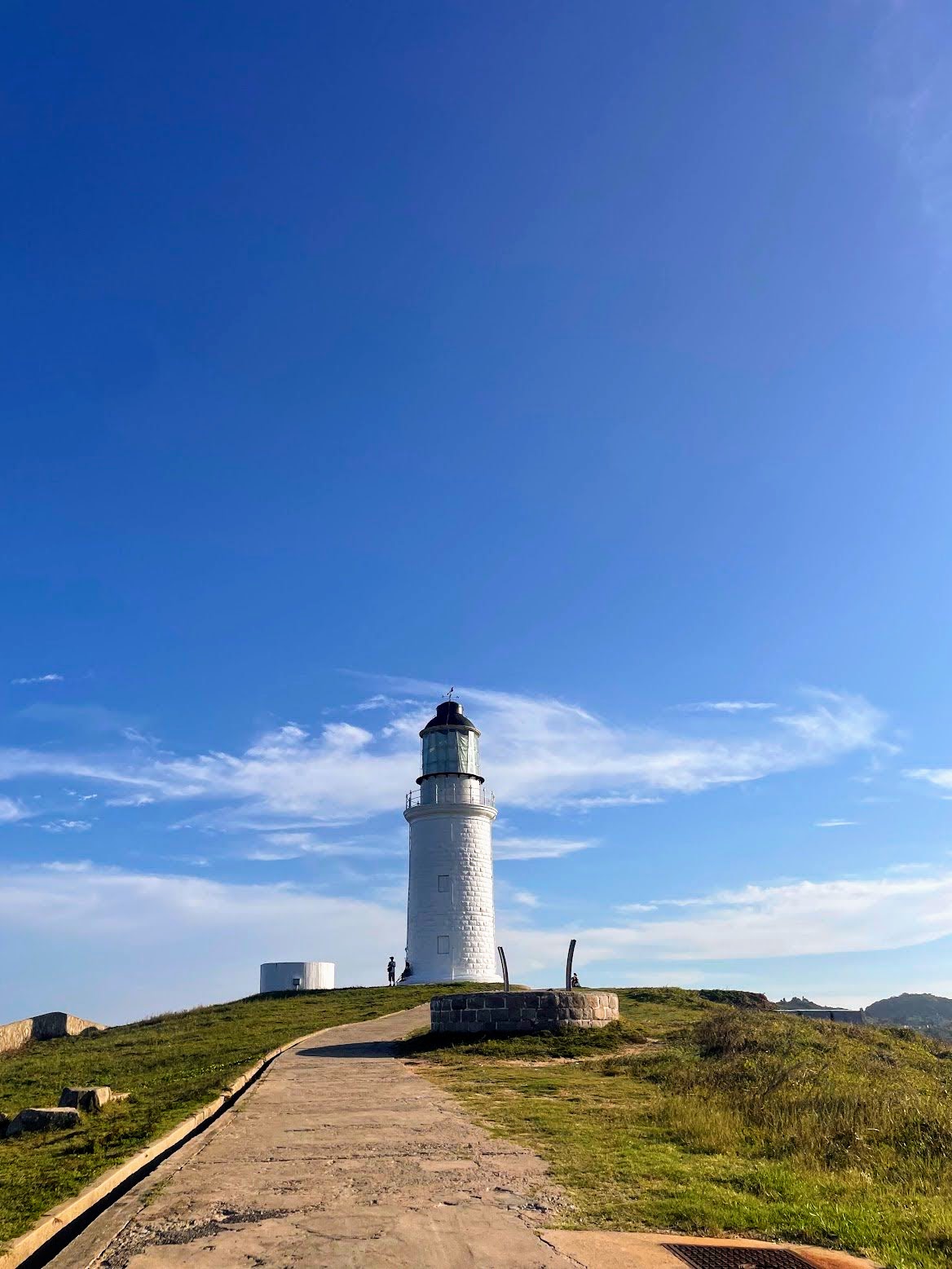
Built during the Qing dynasty's Tongzhi reign, Dongquan Lighthouse (Dongju Island Lighthouse) is one of Matsu's two nationally designated historic monuments. It is the oldest surviving granite lighthouse in the Taiwan–Fujian region and retains its full complex of auxiliary buildings. Its white tower stands proudly on a headland, linked to a white wall that shelters against strong winds. For more than a century, it has guided vessels through the darkness. Framed by blue sea, clear sky and green grass, it remains an elegant landmark.
Fuzheng Village
Fuzheng Village sits below Dongquan Lighthouse, facing the broad, gently sloping Fuzheng Beach. Long one of Dongju's most prosperous fishing villages, its traditional eastern Fujian stone houses rise in tiers along the hillside. Weathered walls and stones holding down roof tiles retain their old-world character. The intertidal beach is rich in clams, a natural larder of seafood. Village, lighthouse and sunset together create a beautiful island scene.
- Day three:
7:40: Dongju → Xiju
Start walking at 8:00: Qingfan → Tian’ao → Caipu’ao → Kunqiu (Snake Mountain) → Qingfan (lunch)
Xiju—approximately 7 kilometers.
13:00: Boat to Nangan.
2:00 p.m.: B&B check-in
15:00–18:00: Fu’ao → Fuxing Village (Niujiao) → Tunnel 88 → Shanlong Village → Juying Road → Fu’ao
Eastern Nangan: 5.5 kilometers.
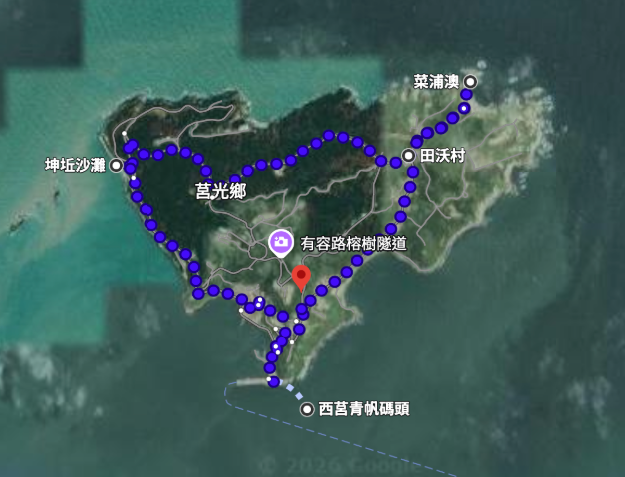
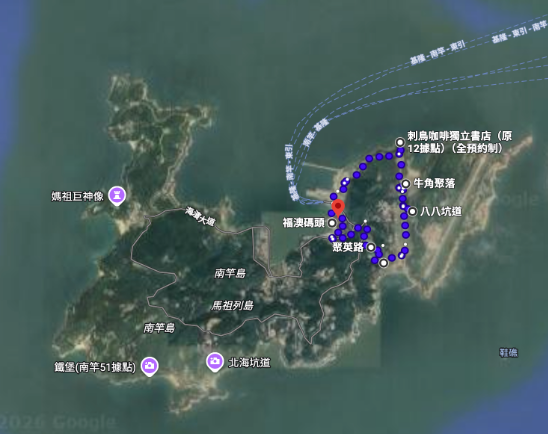
Present of the important attractions
Qingfan Village
Qingfan Village, also written 青蕃, is built against the hills facing the sea and serves as Juguang Township's administrative center. Once prosperous with visiting merchant ships and the presence of an American Western Company, its white houses rise in layers up the steep slopes like a Mediterranean hill town, earning it the nickname ‘Little Hong Kong.’ Walk its uneven stone steps and quiet lanes to find traces of that history, including the former Western Company.
Caipu’ao
Caipu'ao lies at Xiju's northeastern corner. Xiju experienced intense volcanic activity during the Early Cretaceous, and Caipu'ao is one of the few areas in Matsu dominated by volcanic tuff and extrusive rhyolite. Dramatic sea cliffs, sea stacks and channels make it a natural geology classroom. Bridges connect military posts on isolated offshore rocky islets, where imposing defenses meet crashing waves.
Snake Mountain Tern Sanctuary
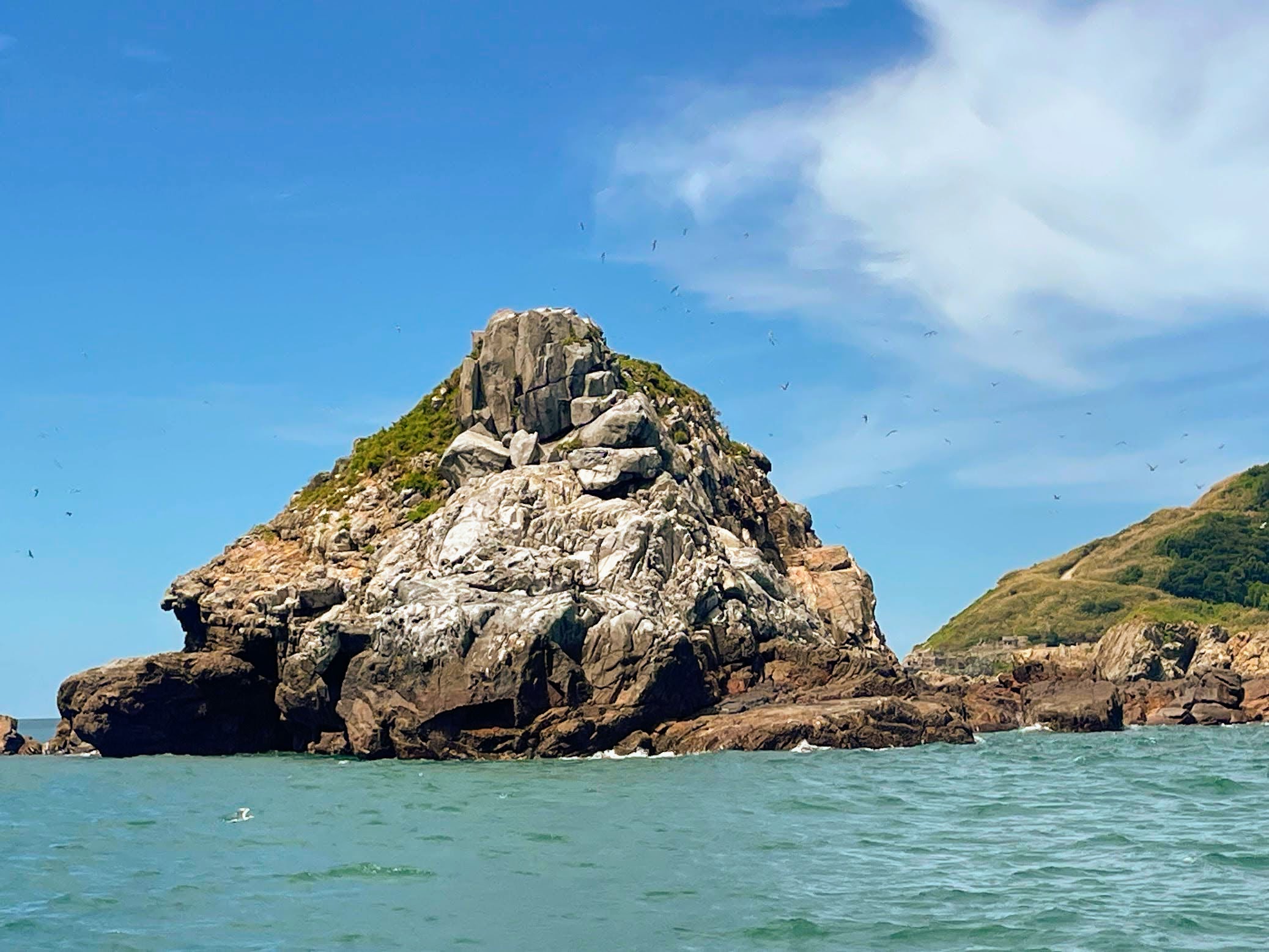
Sheshan lies offshore southwest of Xiju and consists of uninhabited rocky islets arranged like a winding snake. Each spring and summer, black-tailed gulls, roseate terns, black-naped terns and the rare Chinese crested tern—the "bird of legend"—come here to nest and breed. At low tide, Kunqiu Beach offers views of birds circling between sea and sky. This is a precious breeding haven for Matsu's migratory birds.
Present of the important attractions
Thorn Birds Bookstore
Thorn Birds Bookstore occupies Military Strongpoint No. 12 on Nangan. Formerly a coastal defense bunker, it was transformed into a distinctive independent bookstore by former Matsu Cultural Affairs Bureau director Tsao Yi-hsiung. Set against cliffs overlooking the sea, its tunnels retain firing ports and bunker remains alongside extensive collections of historical and cultural books and artworks. Waves, coffee and books bring a poetic atmosphere to these once austere wartime fortifications.
Niujiao Village
Niujiao Village lies at Nangan's northeastern corner, named for its horn-shaped headland. Once the island's largest fishing village, its houses rise in layers along steep slopes. Although it preserved traditional eastern Fujian architecture, much has unfortunately been demolished in recent years. Winding stone stairways between mountains and sea still lead past old houses and temples, revealing the village's enduring, unpretentious culture.
Tunnel 88
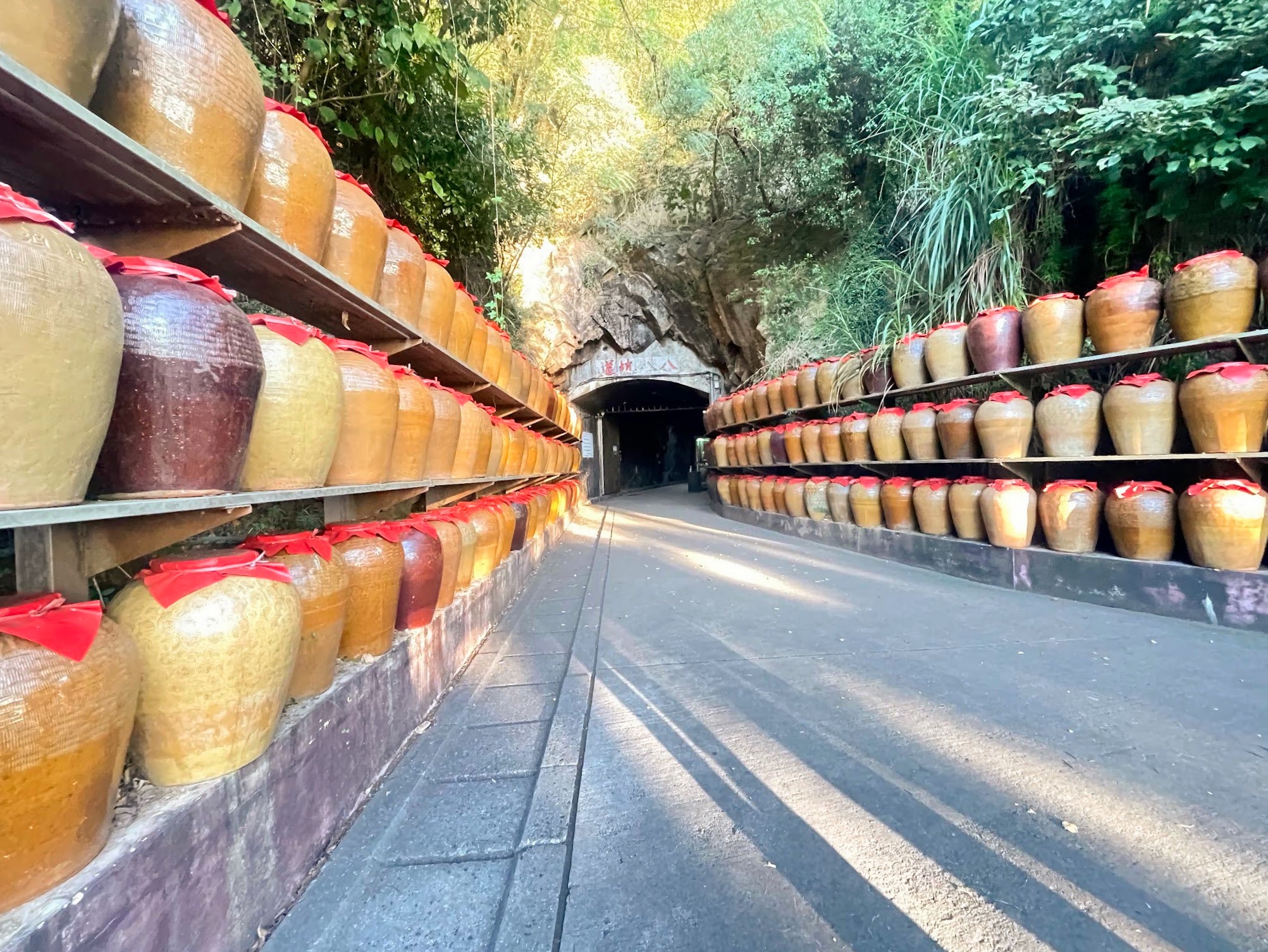
Tunnel 88 was originally a military underground shelter, named to celebrate Chiang Kai-shek's 88th birthday. After wartime administration ended, it was transferred to Matsu Distillery. Its consistently cool temperature and stable humidity make it an excellent cellar for aging spirits. Inside, rows of old ceramic jars and steel storage tanks line the tunnel, while rich liquor aromas fill the air—a striking blend of military history and distilling culture.
Shanlong Village (Jieshou Village)
Shanlong Village is the seat of Lienchiang County Government and Matsu’s political, economic and commercial center. It brings together the county government offices, post office, banks and lively Jieshou Lion Market, with traditional breakfasts and seafood snacks. In front of the county government building, a large, valuable central area remains the distinctive Shanlong Vegetable Park. Its green vegetable plots contrast with the modern buildings around it.
- Day 4: Western and Southern Nangan
Morning: Fu'ao → Qingshui → Zhuluo → Magang (Tianhou Temple) → Yanxia Lianjiang Trail → Jinsha Village (lunch)
Afternoon: Jinsha Village → Tieban Village (Iron Fort) → Beihai Tunnel → Sunshine Spring B&B (if entry is permitted) → Meishi → Central Avenue → Fu'ao Trail → Fu'ao
Western and southern Nangan: Approximately 18 kilometers.
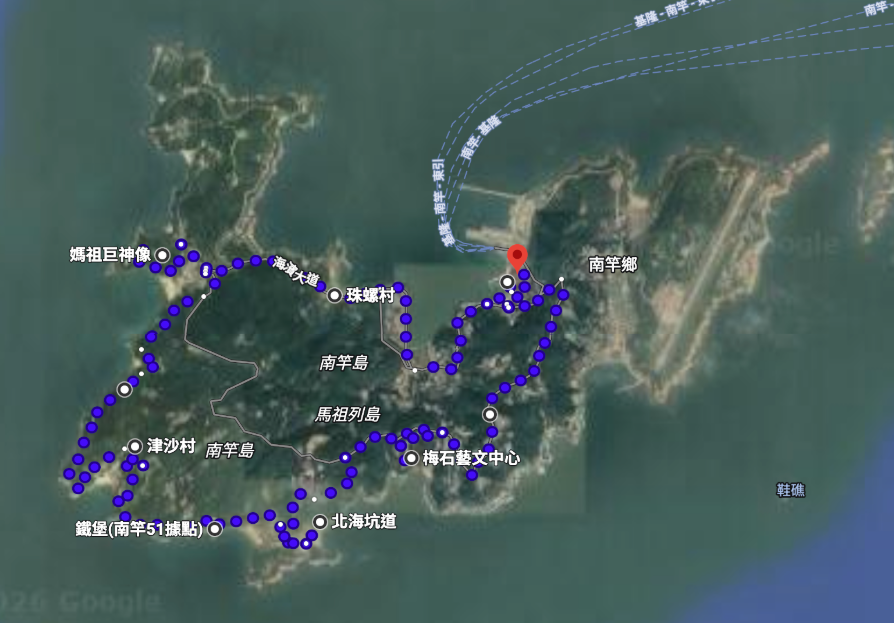
Present of the important attractions
Qingshui Village
Qingshui Village sits in a bay on the northern side of central Nangan Island. Its name comes from the clear stream—the island's only one—that runs through it. The village developed on flat land beside the bay and was once busy with people traveling to nearby military camps and Lienchiang County Hospital. Today, it has several restaurants and authentic local snack shops. Qingshui Wetland in front of the village is an important ecological site, complementing the distinctive, relaxed rhythm of everyday life by the bay.
Zhuluo Village
Zhuluo Village takes its name from its rounded, pearl-like bay and plentiful pearl snails. Backed by green hills and facing a quiet bay, its old and new homes spread gently across the slopes, preserving the simple, peaceful character of a fishing village. The broad beach provides opportunities to observe intertidal life at low tide. At dusk, golden light shimmers on the mirror-calm sea, making this a tranquil escape from the bustle of Nangan Island.
Matsu'ao: Tianhou Temple and giant Mazu statue.
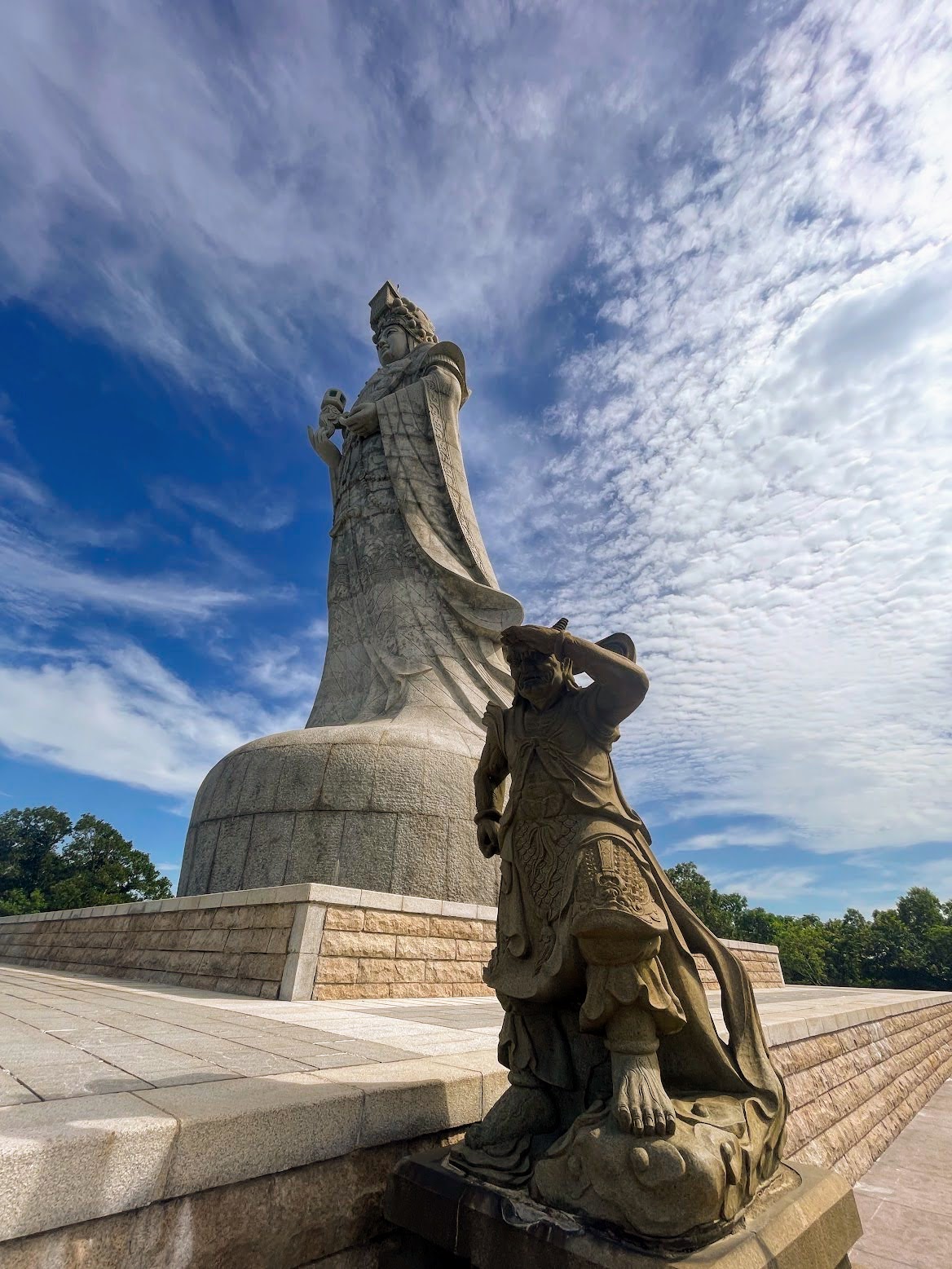
Matsu'ao is the island's most representative center of worship and the bay from which Matsu takes its name. The busy Matsu Tianhou Temple stands between the hillside and the sea. According to legend, a stone coffin inside marks the sacred resting place of the goddess Mazu's remains. Above the bay stands a 28.8-meter-tall statue of Mazu, assembled from hundreds of carefully carved granite blocks. Its solemn, compassionate presence overlooks the entire bay, combining deep religious traditions with expansive pilgrimage views.
Jinsha Village
Jinsha Village lies at Nangan's southwestern tip. Its name originally meant "golden sand," referring to the bay's fine golden beach, before the written characters changed to the present Jinsha. Backed by mountains and facing the sea, the village preserves traditional eastern Fujian stone houses, with stacked bluestone walls, old wooden windows and stones holding down roof tiles. Walk through stepped lanes and past ruined bunkers as aged liquor aromas mingle with the sound of the tide, creating a deeply nostalgic atmosphere.
Tieban Village (Ren’ai Village)
Tieban Village takes its name from the hard granite reef exposed at low tide, whose dark surface resembles an iron plate. The village preserves Tianhou Temple with its distinctive firebreak gables combining metal and fire motifs, as well as the Qing-era Tieban Tower-Burning Festival. An important village on Nangan's south coast, its stone houses overlook the beach and a military harbor used by Matsu's Sea Dragon frogmen. Community development has brought new energy to local arts and culture, blending the warmth of a traditional eastern Fujian village with the beauty of its bay.
Iron Fort
Iron Fort stands on an isolated granite reef extending into the sea, guarding the waters south of Nangan. During the Cold War, it was an important base for military frogmen. The solid rock was hollowed out to create tunnels, firing ports, sleeping quarters and even military dog kennels. Today, a wooden walkway above the waves leads to the fortress. Roaring surf and rugged terrain vividly evoke its days as a frontline outpost.
Beihai Tunnel
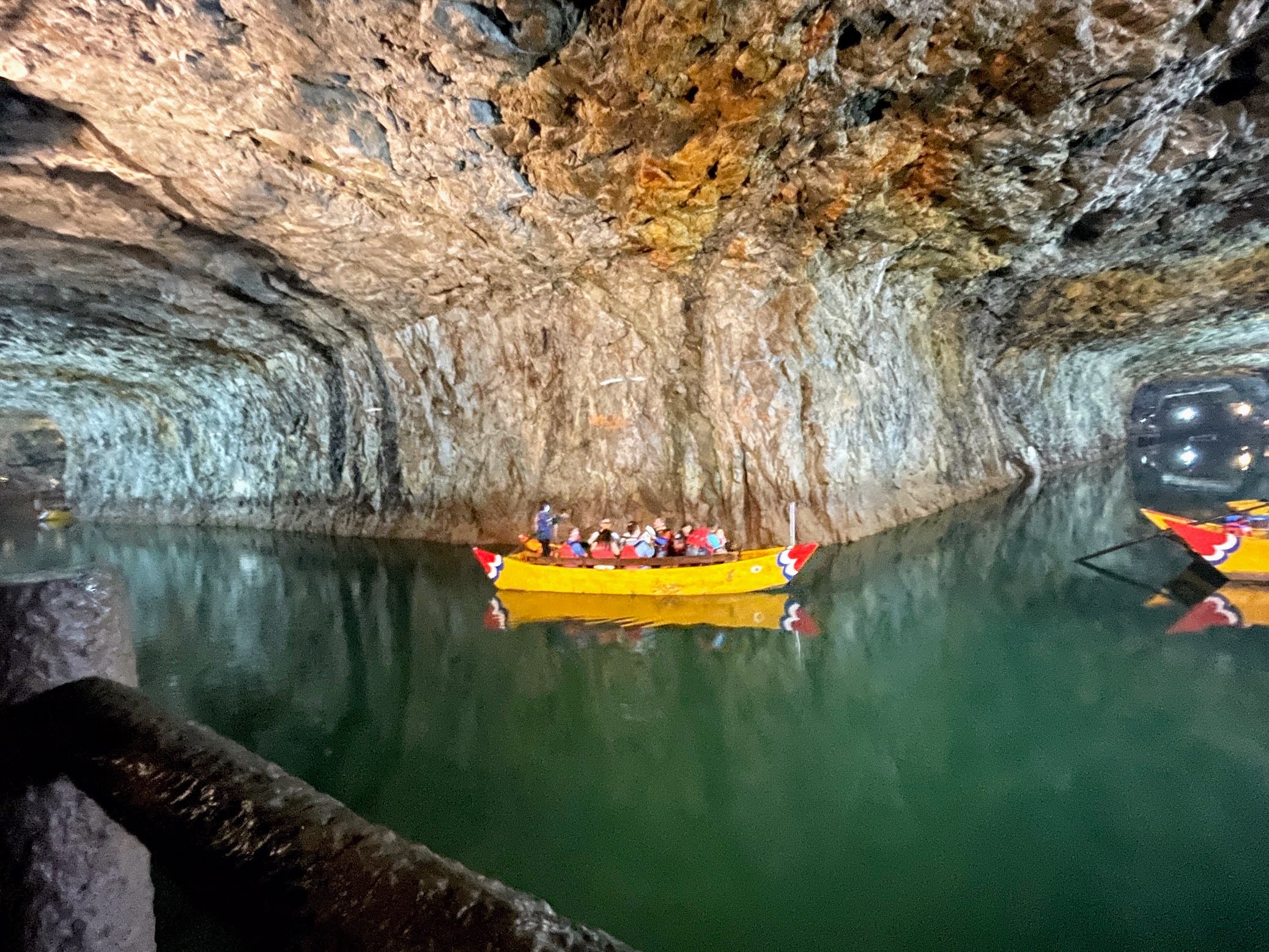
Beihai Tunnel is one of Matsu's most representative military sites. Built in 1968, this remarkable underground harbor was excavated by hand through granite using picks and axes. Its intersecting waterways form a grid approximately 700 meters long, with room to conceal more than 100 landing craft, although it was never used for that purpose. Walk the paths or take a traditional sculling boat through the cool, dim rock passages and marvel at the chisel marks overhead.
- Day 5: Beigan and Daqiu.
Nangan → Beigan →
Morning: Baisha → Banli → Qinbi → Qiaozi (lunch)
About 5.7 kilometres
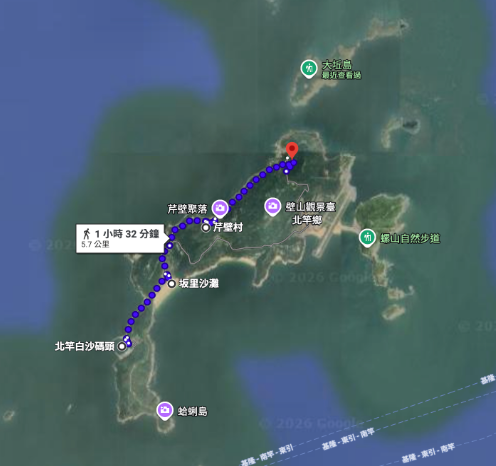
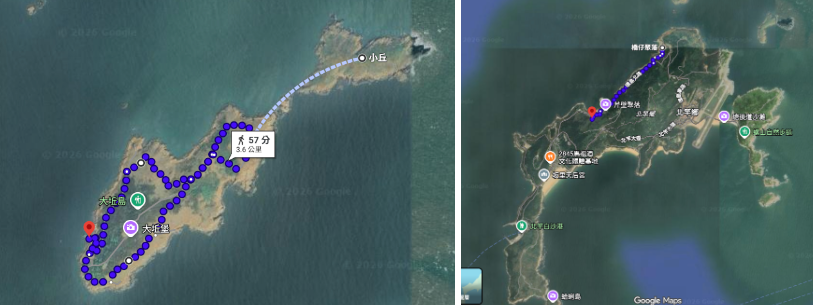
Afternoon: Qiaozi → Daqiu Island → Qiaozi → Qinbi (overnight)
Daqiu: approximately 3.6 km + Qiaozi to Qinbi: 2.0 km = 5.6 km.
Present of the important attractions
Banli Village and Banli Beach
Banli Village on southern Beigan is home to Matsu's broadest golden beach. Banli Beach's fine, gently sloping sand reflects the sky like a mirror as the tide recedes, making it a wonderful secluded place for a shoreline walk. The village landmark, Banli Mansion, showcases the grandeur of an eastern Fujian family home through its stone masonry and timber construction. The brightly colored Golden Ksitigarbha Temple is nearby.
Qinbi Village
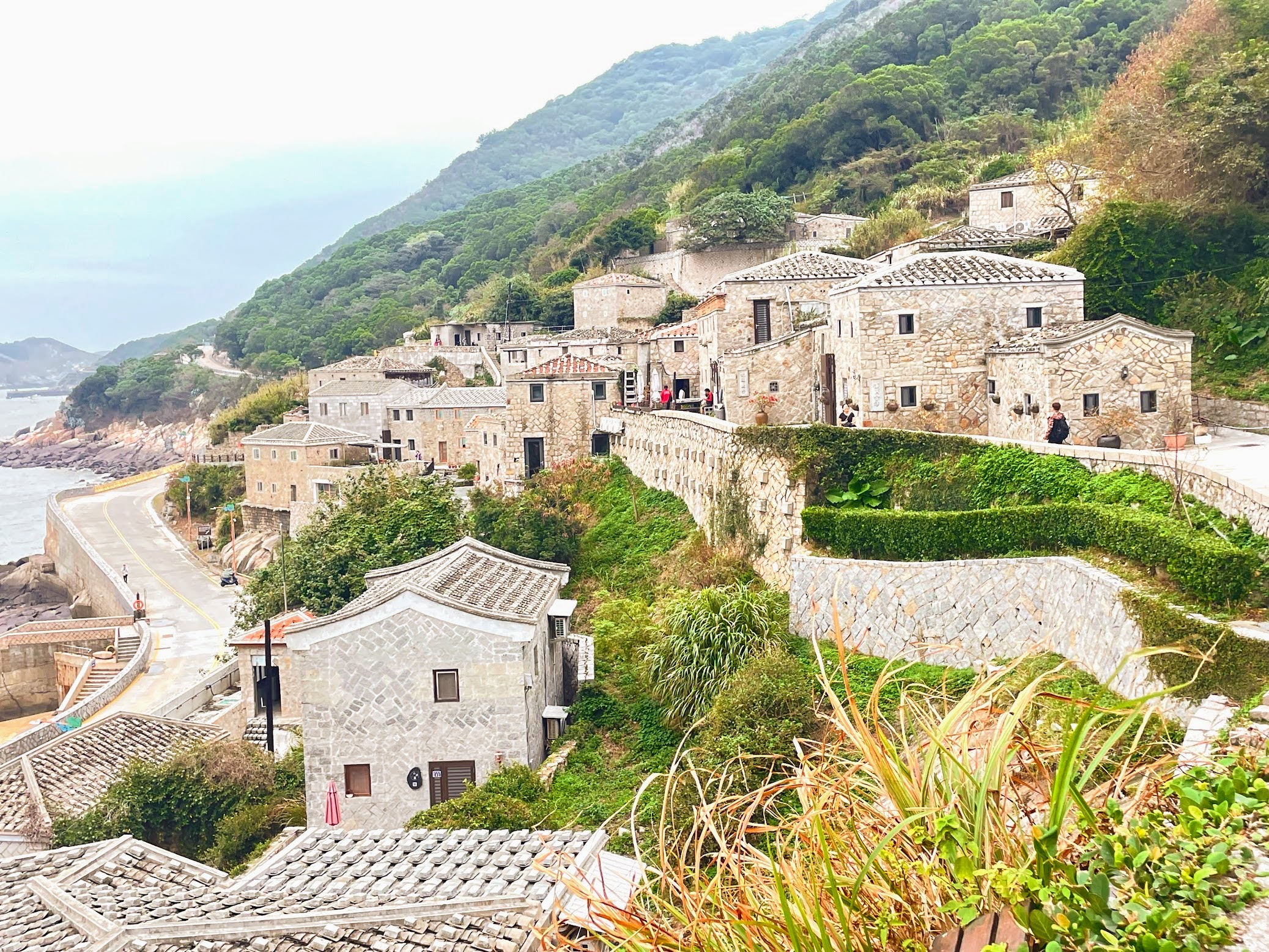
Known as "Matsu's Mediterranean," Qinbi Village sits below Bishan facing Turtle Island. Its hillside holds the Matsu Islands' best-preserved collection of granite houses, built with herringbone masonry and stones weighing down the roof tiles. Faded wartime anti-communist slogans remain on the walls. Winding stone steps and lanes frame beautiful contrasts between the hillside village and the blue sea and sky. Offshore, Turtle Island carries a small temple, quietly watching over Qinbi.
Qiaozi Village
Qiaozi was once Beigan's largest fishing village and an important port for connections with mainland China. It takes its name from the many small bridges crossing its streams and gullies. Declining fisheries and population loss have created the unusual impression of ‘more temples than people, and more gods than residents.’ At least eight vividly colored temples with distinctive firebreak gables stand around this small harbor village. It is also the only settlement in the Matsu Islands with a settled Minnan community.
Daqiu Island
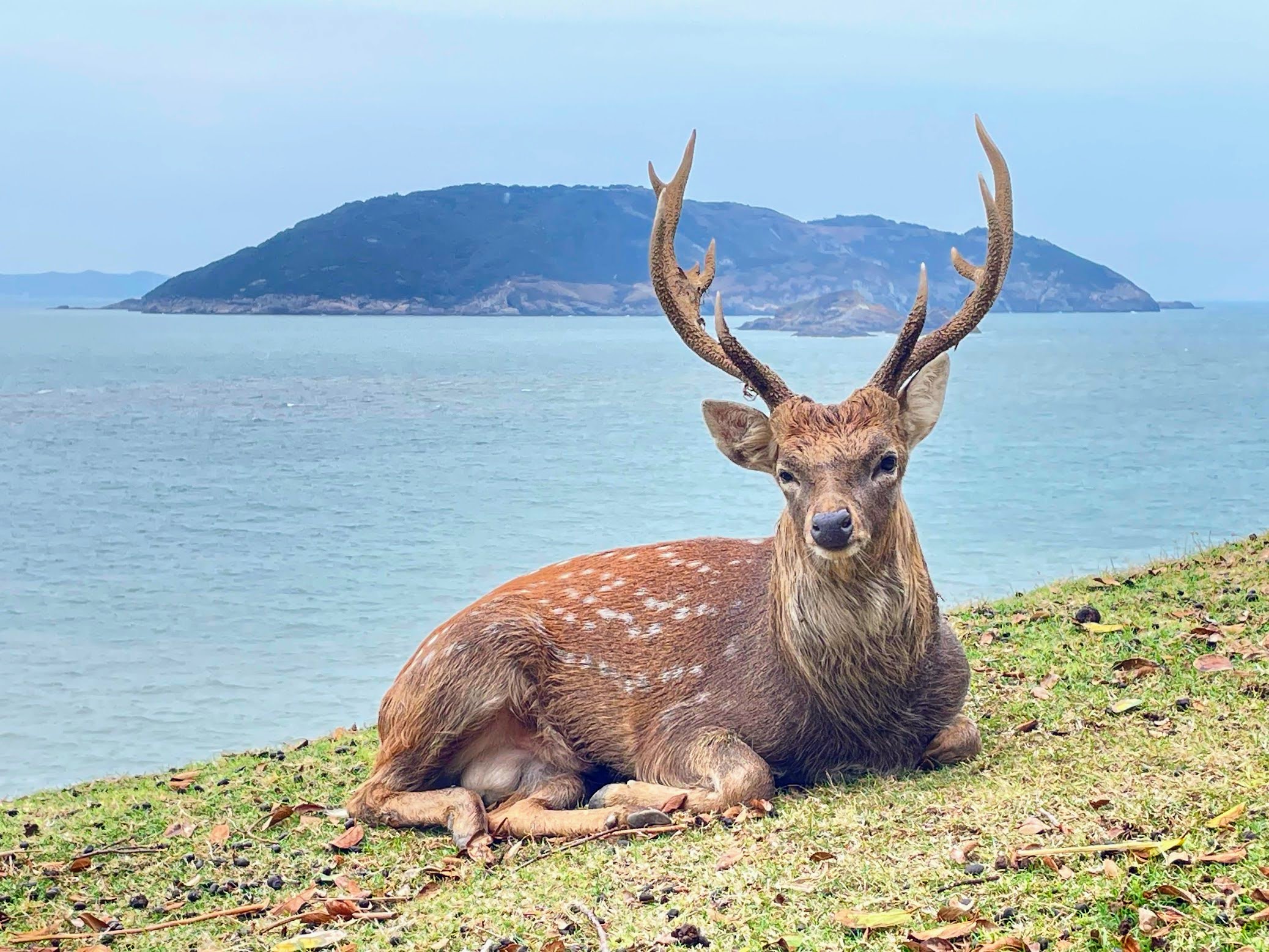
Daqiu Island lies offshore to the north of Beigan. Once an important fishing ground and military stronghold, it became deserted after soldiers and residents departed. A growing population of Taiwan sika deer later transformed it into an ecological haven. An island circuit trail offers encounters with deer among shady woods, steep cliffs and abandoned stone-house villages. Feed and interact with the deer up close while enjoying blue seas and dramatic coastal erosion features.
- Day 6: Beigan → Taipei
Morning: Qinbi → Shangcun → Tangqi → Hou'ao → War and Peace Memorial Park → Luobang Trail → Tangqi (lunch)
(approximately 6.5 kilometres)
Afternoon: Browse Tangqi’s streets and buy souvenirs → Arrive at the airport at 16:00 for the flight to Taipei
Present of the important attractions
Qinbi Tianhou Temple, a county-designated historic site.
Qinbi Tianhou Temple stands at the heart of Qinbi Village and is dedicated to Mazu, the Heavenly Holy Mother. It is one of Matsu's two county-designated historic sites. Backed by hills and facing the sea, it is known for its colorful firebreak gables and stone carvings. A distinctive feature is its worship of the Iron General, a frog deity who protects the community. Frog-shaped stone railings and an incense burner outside the hall express the island's lively religious traditions.
Longjiaofeng Temple, Qinbi Village (dream-seeking temple)
Longjiaofeng Wuwei Linggong Temple stands high on the steep slopes of Bishan behind Qinbi Village, with commanding views. It is known for the rare practice of seeking guidance through dreams. At designated times, worshippers may stay overnight in the temple, praying for the deities to offer answers and direction in their dreams.
Tangqi Village
Tangqi Village is Beigan Township's administrative and commercial center and the island's most populous village. Beigan Airport, the township office and well-known local eateries are all here. Shops line the streets, serving delicious fish noodles, sweet-potato dumplings and seafood dishes. With the airport and runway right in the village, Tangqi combines practical island living with a relaxed pace.
Houao Beach and Village
Houao Village sits on a peninsula-like area in northeastern Beigan, connected to Tangqi by the flat, fine-sand Tanghoudao Beach. Before the airport was built, villagers had to wade across at high tide, reflecting its distinctive tombolo landscape. Simple granite houses rise along the hillside, preserving the quiet character of a traditional fishing village. The War and Peace Memorial Park is on the hill behind it.
Luoshan Trail: Confucius at Sea
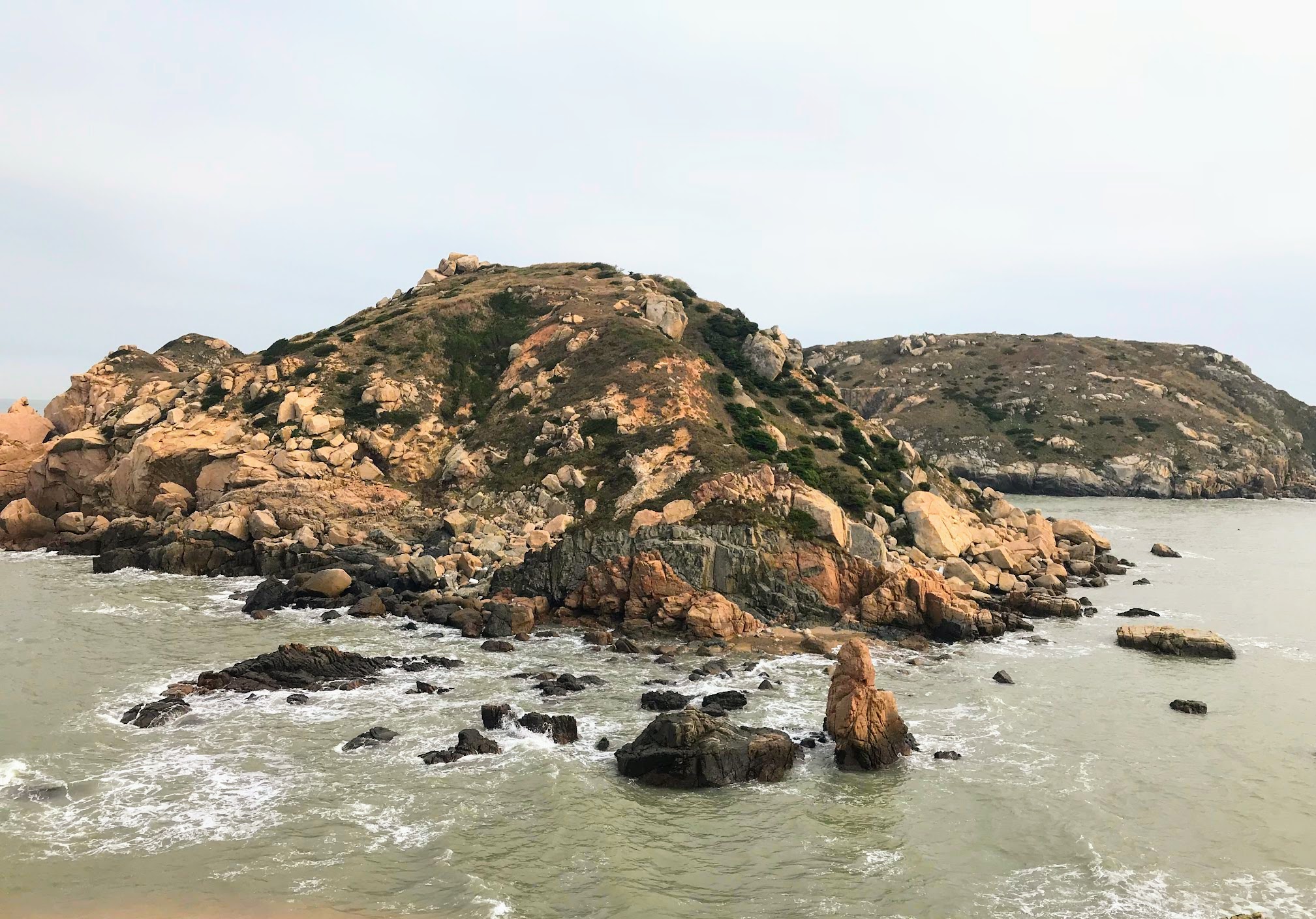
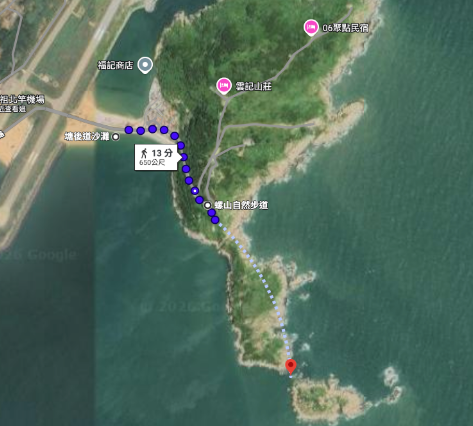
The Luoshan Trail follows a narrow, rugged ridge at Beigan's northeastern tip for approximately 700 meters. Granite cliffs plunge into deep water on both sides, creating an isolated and dramatic landscape. At the end, an offshore sea stack sculpted by waves and strong winds resembles a dignified scholar bowing with clasped hands, earning it the name "Confucius at Sea." Strong winds and crashing surf add to the power of this coastal spectacle.
【Activity Notes】
- Photos and videos will be taken during the activity. If you do not wish to appear, please tell us in advance and actively avoid the camera.
- Activities may be adjusted according to participants’ needs, facility conditions and weather, with safety and overall quality as the highest priorities.
- If the forecast before the activity is unsuitable, cancellation with a refund or rescheduling may be arranged after consultation.
- Rain plan: In light rain, activities continue with raincoats and extra attention to safety. If rain becomes heavier, transportation, activities and locations will be adjusted.
- If the weather is bad, please follow the guide's instructions.
- Help your teammates and work together. Do not leave the group or act independently.
【Event Features】
- Professional leaders introduce local history and culture, making the journey much more than a walk. Cultural stories and natural ecology enrich the experience, balancing knowledge with personal connection.
- Comprehensive planning and support, with care for meals, clothing, accommodation and transport.
- Photography throughout preserves lasting memories of the journey.
- High Safety Standards: We uphold the highest standards for activity safety.
- Affordable prices and rich, professionally delivered experiences offer excellent value.
【Event Information】
- Expected capacity: 20 participants.
- Suitable for hikers aged 10 and above who exercise regularly. Participants aged 10–18 must register with and be accompanied by a parent. School groups must obtain parental consent forms.
- Please make sure you are in good health. People with heart disease, high blood pressure or other conditions unsuitable for this activity should not register. This activity is not suitable during pregnancy. If unsure, consult a qualified physician before registering.
- Places are held for three days after registration. If payment is not received, they will be released.
- After registration, we will mainly contact you by email or LINE. If you have not received confirmation within three days, please call us.
- A pre-trip notice will be sent 2–3 days before the activity, with the meeting time and location, important information and the leader’s contact number for the day.
- Activity difficulty rating:★★☆
Meal Arrangements
- Breakfast is generally provided by the accommodation. If not, it will be arranged separately.
- Lunch is generally a group meal, boxed lunch or local specialty.
- Dinner: Mainly at local restaurants, enjoying regional specialties and supporting local businesses.
- Please bring your own utensils and water bottle throughout the trip to reduce single-use waste.
[Housing arrangements]
- Accommodation is generally in hotels, B&Bs and pilgrim lodgings. Standards vary along the route, but we prioritize cleanliness and bathroom facilities where you can refresh after the day's walk.
- Local accommodation varies. Rooms mainly sleep four or more people, and beds may be doubles rather than singles.
Safety Arrangements
- Experienced team leader and staff.
- A support vehicle and route safety staff accompany and protect the group throughout.
- Adjust routes flexibly with changing weather and prepare a rainy-day alternative.
【Payment method】
-
- Bank Transfer: Bank details are as follows:
E.SUN Bank (808), Minquan Branch
Account number: 0598-940-165166
Account holder: 台灣走透休閒事業股份有限公司 (Taiwan Discovery) - Use the registration system to pay online by credit card or LINE Pay.
- We accept National Travel Cards (merchant number: 8080707805). Use your card to register and pay for activities!
- Bank Transfer: Bank details are as follows:
-
- We are an approved Sports Administration Sports Credit merchant. Because of our e-commerce payment process, please pay the full amount first. After the activity, we will refund the eligible Sports Credit amount to your original payment method.
Cancellation Policy
- Cancellations at least 31 days before the activity will be refunded after an administrative fee of NT$1,000.
- 20% of the order amount will be deducted for cancellations 21-30 days before the activity.
- 30% of the order amount will be deducted for cancellations 11-20 days before the activity.
- 50% of the order amount will be deducted for cancellations 4-10 days before the activity.
- No refund is available for cancellations within 3 days before the activity.
- No refund is available for late arrivals or no-shows.
【Weather influence】
- For participant safety, we reserve the right to change, postpone or cancel the itinerary when typhoons, heavy rain, high waves, strong winds, thunder or other force majeure prevent departure.
- If we notify you before departure that the trip is canceled because of poor weather, you may reschedule or request a refund. Bank-account refunds incur a NT$30 transfer fee.
- If force majeure prevents completion, the refund is calculated by weighting the unfinished portion. Refund formula:
Unfinished booked days / (booked days + 2) × amount actually paid. For example, if three days of a six-day booking cannot be completed because of force majeure, the calculation is 3 / (6 + 2) × the amount paid.
【About Taiwan Discovery】
- Taiwan Discovery was founded in 2012 to share our love of nature and outdoor activities. Years of leading trips have given us extensive experience with participants of different abilities and the conditions at our activity sites. We continuously train our staff and maintain high standards of professionalism and attitude.
- The goal of Taiwan Discovery is to make every activity and every camp the best and safest experience possible.
[Professional and safety requirements for team leaders]
- Our leaders, teachers and activity instructors are longstanding Taiwan Discovery team members with extensive experience in running camps and leading activities.
- We assign suitable staff to each camp role and specialist activity, ensuring that their expertise, attitude and experience meet our standards.
- Before each camp, all staff attend multiple planning meetings to fully understand the camp’s goals, participants, schedule, routes, responsibilities, teamwork arrangements and essential safety checks.
- All staff must be familiar with the activity procedures and location. Only experienced Taiwan Discovery staff who have led multiple activities and earned the trust of colleagues and participants may serve as trip leaders. The trip leader directs the activity and oversees the entire group.